

Our Services
Physical Therapy
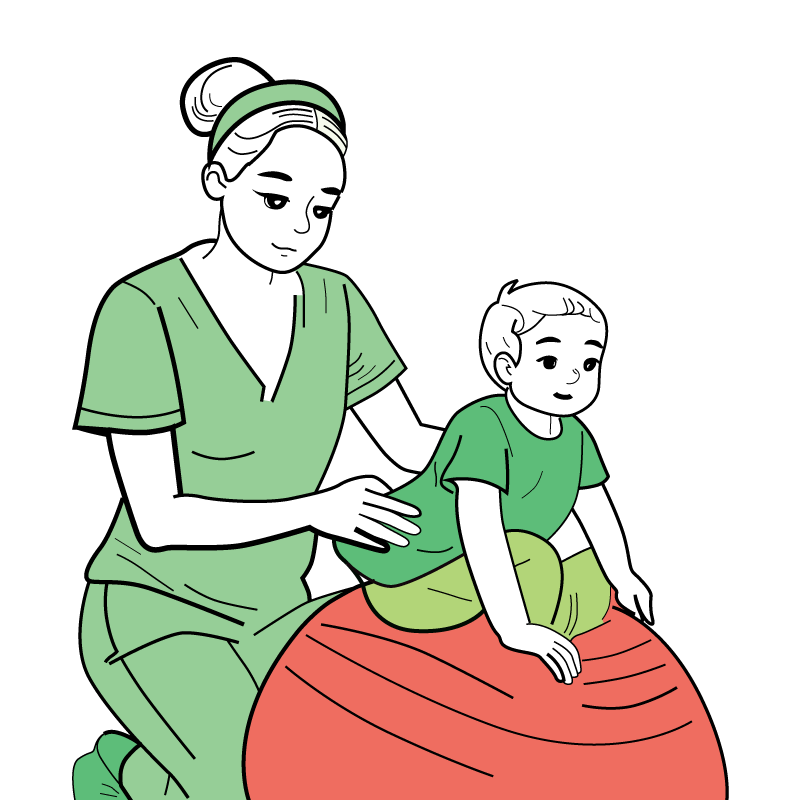
Physical Therapy for Cerebral Palsy
How does physical therapy help?
Physical therapy is often the first step in treating cerebral palsy. It can help improve motor skills and can prevent movement problems from getting worse over time. Physical therapy implements strength and flexibility exercises, heat treatment, massages and special equipment to give children with cerebral palsy more independence.
The extent to which physical therapy helps depends on the severity and type of each case of cerebral palsy. Children with milder cases of CP may only require some physical therapy to treat their condition. In more severe cases, it may be used alongside other treatments or medications. Beginning physical therapy as early as possible usually gives children the best chances at improvement.
Benefits of Physical Therapy
There are many benefits of physical therapy, from improving mobility to preventing future issues such as contractures and joint dislocations by keeping the body strong and flexible. Many children with CP increase their level of self-reliance through physical therapy. The main goal of physical therapy is to make everyday movements easier for children with cerebral palsy.
Some of the benefits by cerebral palsy type include:
Spastic
Physical therapy can reduce the muscle tension and jerky movements associated with spastic cerebral palsy. Exercises such as stretching can even relieve stiffness over time.
Athetoid
People with athetoid cerebral palsy use physical therapy to increase muscle tone and gain more control over their movements.
Ataxic
There are exercises that can improve balance problems faced by those with ataxic cerebral palsy.
Physical therapists also tailor treatment based on the location of movement issues. Movement issues in children with cerebral palsy can be limited to one half of the body (hemiplegia), the legs (diplegia) or in the torso and all four limbs (quadriplegia). Therapists prescribe special exercises and routines for hemiplegia, diplegia, and quadriplegia that may help the child regain movement in the affected area over time.
Physical therapy can also treat a range of other issues experienced by children with CP, including:
Scoliosis
An abnormal curvature in the spine, common in up to 30 percent of children with cerebral palsy.
Thoracic Kyphosis
A curvature of the upper spine bending it forward.
Lumbar Lordosis
A contortion of the lower spine.
Pelvic Inclination
A protrusion of the pelvis either in the front or rear
Pelvic Rotation
One hip rotates forward more.
Pelvic Obliquity
One hip is higher than the other.
Knee Deformity
Abnormally straight or bent knees that may be caused by pelvic deformities.
Shortened Achilles Tendon
A shortened tendon that causes issues with walking and standing.
Hand and Wrist Deformities
Abnormal flexing in the hand and wrist that prevents development of fine motor skills.
What to expect in physical therapy
Physical therapy is different for every child with cerebral palsy. First, the therapist has to evaluate the child’s movement problems to create a treatment plan. Then, generally, a combination of exercises, muscle relaxing techniques and special equipment is used to improve movement. The degree to which physical therapy can improve a child’s specific issues depends on the severity of the condition.
Exercises
Physical therapy can reduce the muscle tension and jerky movements associated with spastic cerebral palsy.
Improving Muscle Tone
People with athetoid cerebral palsy use physical therapy to increase muscle tone and gain more control over their movements.
Posture & Walking
There are exercises that can improve balance problems faced by those with ataxic cerebral palsy.
Equipment
Physical therapists use a range of mobility aids to make therapy more effective.
Physical therapists also tailor treatment based on the location of movement issues. Movement issues in children with cerebral palsy can be limited to one half of the body (hemiplegia), the legs (diplegia) or in the torso and all four limbs (quadriplegia). Therapists prescribe special exercises and routines for hemiplegia, diplegia, and quadriplegia that may help the child regain movement in the affected area over time.
Hydrotherapy
At the Pretoria Centre for Cerebral Palsy, we offer hydrotherapy as part of our holistic treatment approach. Hydrotherapy, also known as aquatic therapy, uses the properties of water to improve movement, strength, and overall well-being in children with cerebral palsy and other mobility challenges.
Key Benefits of Hydrotherapy:
Improves muscle strength and flexibility
Enhances balance and coordination
Reduces muscle stiffness and spasticity
Supports better posture and mobility
Boosts confidence and independence
